

Balancing life after stroke
Maria, 58, grasped her kitchen counter for support as the floor seemed to tilt away from her. Three months after the stroke, her arm was stronger, but her balance remained a daily struggle.
She’s not alone.
- Up to 83% of stroke survivors experience postural instability.
- Stroke attacks 119–145 per 100,000 people in India each year.
- It's the 4th and 5th leading cause of death and disability in India, respectively. 1,2
Why is balance affected after a stroke?
Many individuals have trouble with balance after having a stroke. It's not just dizziness, though; it's a complicated phenomenon that impairs the way the body stands, moves, and remains upright. One of the main reasons is weight-bearing asymmetry, when stroke survivors put more weight on their unaffected leg and try to avoid the affected one. This imbalance of weights may be more difficult to balance and risk-increasing.
But there's something else that stroke can lead to:
- One-sided muscle weakness.
- Alterations in the brain's processing of movement and body positioning
- Decreased sensation in the ankles, which impacts how we sense the ground.
- Vision and perceptual difficulties make it more difficult to judge movement and space.
- Cognitive difficulties also decrease reaction times.
Even when individuals regain strength in their limbs, balance can remain unbalanced. That's because simply standing perfectly on both legs does not necessarily provide stability. The weaker limb may bear more weight, but it does not always assist with balance control as well as the stronger one.

From guesswork to precision measurement
Conventional balance testing gives initial information but is not precise. Standard tests include:
• Berg Balance Scale (BBS)
• Timed Up and Go (TUG) test
• Brunel Balance Assessment
• Community Balance and Mobility Scale
• Postural Assessment Scale for Stroke Patients
• 10-meter walking test (10mWT)
• 6-minute walking test (6MWT)iv
Computerized posturography takes assessment one step further by measuring static balance (standing) and dynamic balance (in motion) through center of gravity movement to identify postural sway and determine whether ankle, hip, or combined strategies are employed in motion and during disturbances.

Transforming recovery through early testing with Equipoise
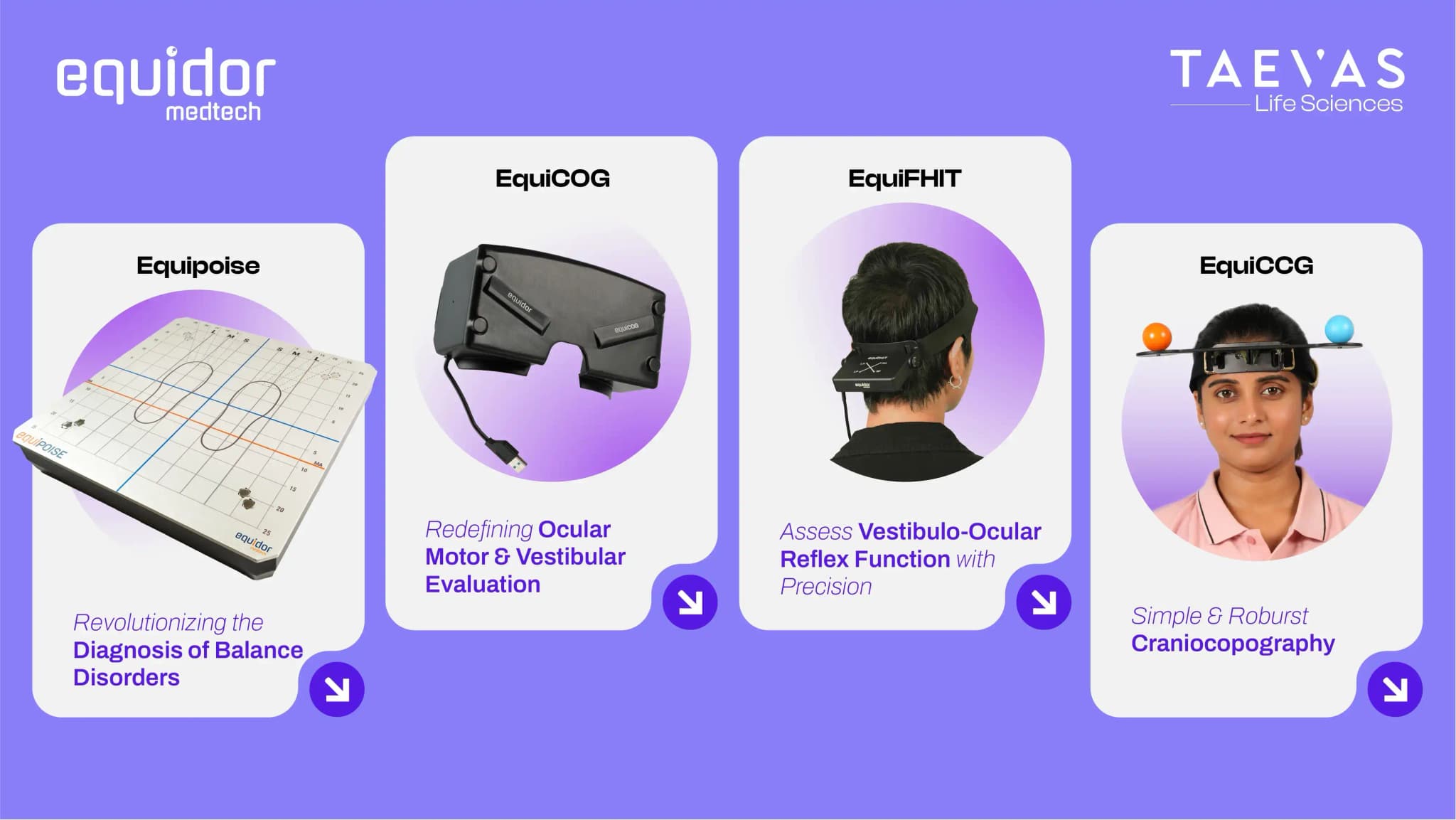
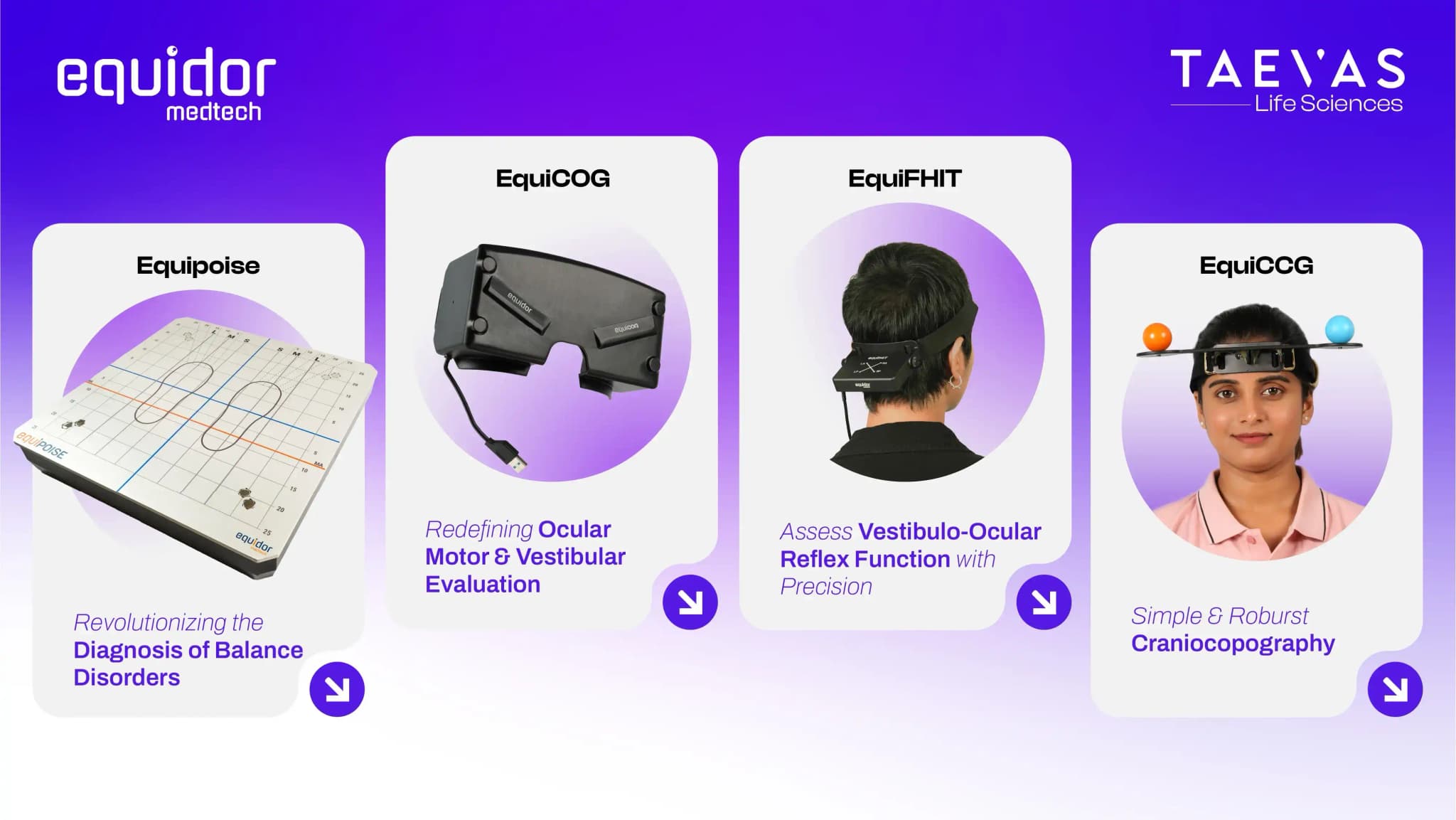
Equipoise represents a next-generation stabilometric posturography system with high-resolution force measurement capabilities. The system detects subtle deficits that traditional assessments miss, even years after a stroke.
Key features
- Advanced test protocols: Sensory denial, motor complexity, weight shifts, and stability limits.
- Rehab tools: Cognitive-postural training, proprioceptive pursuit, dynamic balance games.
- Real-time feedback: Instant sway graphs, directional instability detection.
- High-resolution platform: 60×60 cm surface, 100 Hz sampling.
- Clinician-friendly analysis: No jargon, intuitive metrics like sway velocity and max sway distance.
- Universal presentation: Time series and position plots for every protocol.
- Dynamic range: 5 Kg to 400 Kg. Most repurposed platforms saturate above 80 kgs.
Equipoise empowers clinicians with precise diagnostics and engaging rehab tools ideal for personalized balance care. Beyond testing, Equipoise offers engaging rehabilitation tools that provide immediate visual feedback, helping patients understand their progress and stay motivated throughout recovery. vi
Easy steps you can take
- Keep a recovery journal: Track changes in balance and progress to obtain a more effective rehabilitation strategy.
- Physical exercise: Support exercises, ankle strengthening, core strengthening, leg strengthening exercises, heel-to-toe walking, and progressive reduction of support.
- See a specialist: Consider visiting a neurologist or a vestibular therapist.
- Order advanced testing: Still having issues with balance, ask if Equipoise would be appropriate for more detailed testing.

Bottom line
Stroke recovery is time-sensitive; the brain is most adaptable in the first few weeks. Early balance assessment helps predict long-term mobility and independence. Measuring postural performance during this window allows for targeted interventions that reduce fear of falling and improve outcomes.
If you’ve been feeling off-balance or unsteady, it might be time to take a closer look. Talk to an audiologist or ENT specialist about computerized posturography with Equipoise, a smart and precise way to assess your stability.
For more information, visit www.taevasglobal.com/products-equipoise
Take the first step towards a better balance. Book your consultation today.
References:
1. Khan F, Chevidikunnan MF. Prevalence of Balance Impairment and Factors Associated with Balance among Patients with Stroke. A Cross-Sectional Retrospective Case Control Study. Healthcare (Basel). 2021 Mar 13;9(3):320. doi: 10.3390/healthcare9030320.
2. Behera, D.K., Rahut, D.B. & Mishra, S. Analyzing stroke burden and risk factors in India using data from the Global Burden of Disease Study. Sci Rep 14, 22640 (2024). https://doi.org/10.1038/s41598-024-72551-4
3. Halmi Z, Stone TW, Dinya E, Málly J. Postural instability years after stroke. Journal of Stroke and Cerebrovascular Diseases. 2020 Sep 1;29(9):105038.
4. Song JW, Kim JM, Cheong YS, Lee YS, Chun SM, Min YS, Jung TD. Balance Assessment in Subacute Stroke Patients Using the Balance Control Trainer (BalPro). Ann Rehabil Med. 2017;41(2):188-196. doi: 10.5535/arm.2017.41.2.188.
5. Vanicek N, King SA, Gohil R, Chetter IC, Coughlin PA. Computerized dynamic posturography for postural control assessment in patients with intermittent claudication. J Vis Exp. 2013 Dec 11;(82):e51077. doi: 10.3791/51077.
6. Taevas Global. (n.d.). *Taevas Global*. Retrieved June 16, 2025, from https://www.taevasglobal.com/