

A wake-up call
Lalitha, a 55-year-old woman from Hyderabad, bent down to pick up a dropped key, and the whole room twirled. She grabbed the table; afraid she might faint. She is one of an estimated 90 lakh Indians (≈0.7 % of the population) who live with vertigo at any time.1 Women of her age are two to three times more likely to face it.
What exactly is vertigo?
Picture the balance system in your inner ear as a gyroscope. When dust-like calcium crystals, infection, or nerve misfires upset this gyroscope, your brain gets mixed messages: eyes say “still”, ears say “moving”. The result is vertigo- the false feeling that you or the room is spinning.
Think of it as watching a shaky phone video while standing still: your body believes the camera, not your feet.
Common symptoms (spot them early)
• Spinning or swaying feeling, even when seated
• Sudden loss of balance or veering to one side
• Nausea or vomiting
• Sweating, palpitations, panic during vertigo attacks
• Blurred or “bouncy” vision when you turn your head
• Ringing or fullness in the ear during severe bouts
Why does vertigo happen?
- Benign Paroxysmal Positional Vertigo (BPPV) – tiny ear crystals float into the wrong canal; most frequent cause.2
- Vestibular neuritis / Labyrinthitis – viral inner-ear swelling.
- Ménière’s disease – excess inner-ear fluid; brings ear-ringing.
- Migraine-related vertigo – headache circuits disturb balance.
- Low blood pressure, certain heart or thyroid issues, and some medicines.
- Head injury – even a mild concussion can trigger months of dizziness.

Dangers of ignoring the spins
• Falls and fractures, especially in the elderly.
• Fear of leaving home leads to isolation and depression.
• Missed workdays and medical bills.
• Untreated ear infections or tumours can quietly worsen.
Early diagnosis keeps small problems from becoming life-changing ones.
How doctors test balance today
Many clinics still rely on patient history and physical maneuvers like the bedside Dix–Hallpike maneuver, hearing tests, or an MRI. A caloric test (warm/cold water in the ear) is common, but it checks only a single canal at an unnatural speed. Up to 30% of patients walk away without a clear diagnosis or treatment plan.
The new wave: three smarter, quicker tests
Tool | What It Does | Your Experience | Why It Matters |
|---|---|---|---|
Videonystagmography (VNG) | Infra-red goggles track tiny eye jerks (nystagmus) while you lie, sit, and watch dots | Wear a VR headset-like mask for 30 minutes | Maps all six ear canals; gives an objective print-out |
Craniocorpography (CCG) | Light sensors record head-and-body sway while you stand or march in place | Stand/walk for 5-10 min with the head tracker on the head | Demonstrates how the inner ear, muscles, and brain work together; ideal for pre- and post-rehabilitation. |
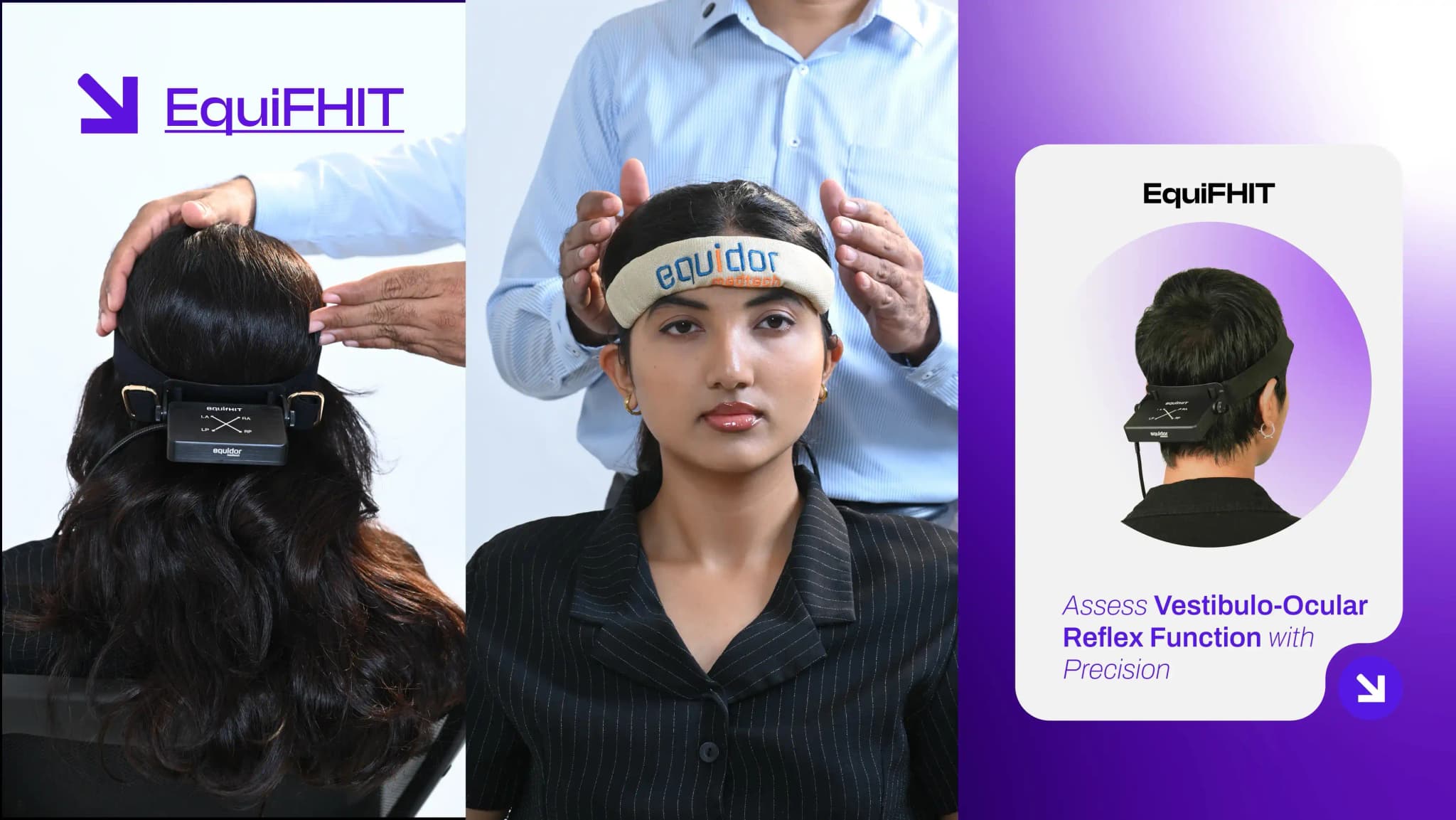
Functional Head Impulse Test (fHIT) | Checks if each canal keeps vision steady during rapid real-life head turns | Headband sensor, press a button when you read flashing letters; 5 min | Catches high-speed deficits, calorics miss; instant score guides exercise plan |
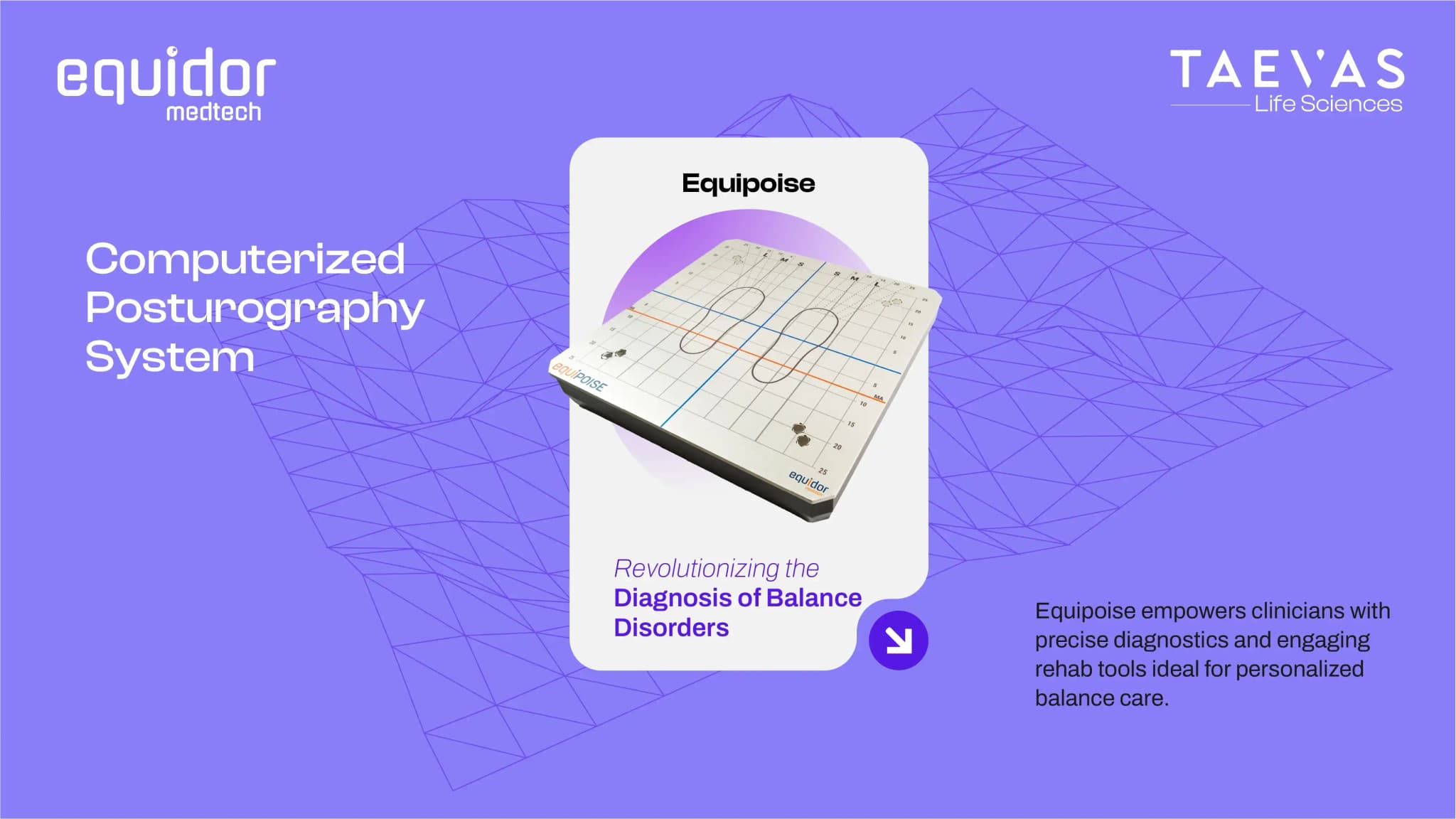
Computerized Posturography System
| Centre-of-gravity sway on a force-plate platform
| Stand on a 60 cm × 60 cm plate; real-time graphs on screen
| Gives exact numbers on fall risk, sensory/motor balance issues; offers built-in rehab games for weight-shift training |
Together, they give a 360-degree picture of your balance system and are now available in several Indian neuro-otology centres. 
Simple steps you can take
- Write a quick diary: note when, how long, and what movements trigger dizziness.
- Consult your doctor: Start with your primary care physician or an ENT (Ear, Nose, and Throat specialist). Clearly describe your experience.
- Ask about advanced testing: If the cause isn't immediately clear, or symptoms persist, inquire if Videonystagmography (VNG), Craniocorpography (CCG), or a Functional Head Impulse Test (fHIT) would be appropriate for a more detailed assessment. These tests are often performed by audiologists or vestibular specialists.
- Seek Specialized Care: For complex cases or targeted rehabilitation, consider seeing a neurologist or a vestibular therapist.
The Bottom Line
Vertigo doesn't have to be a life sentence of uncertainty. With modern diagnostic tools like VNG, CCG, fHIT, and computerized posturography, healthcare professionals can now see the unseen – pinpointing the root cause of vertigo with unprecedented accuracy. This knowledge opens the door to effective treatments, helping you step away from the spin and back onto solid ground. Take that first step towards understanding and relief today.
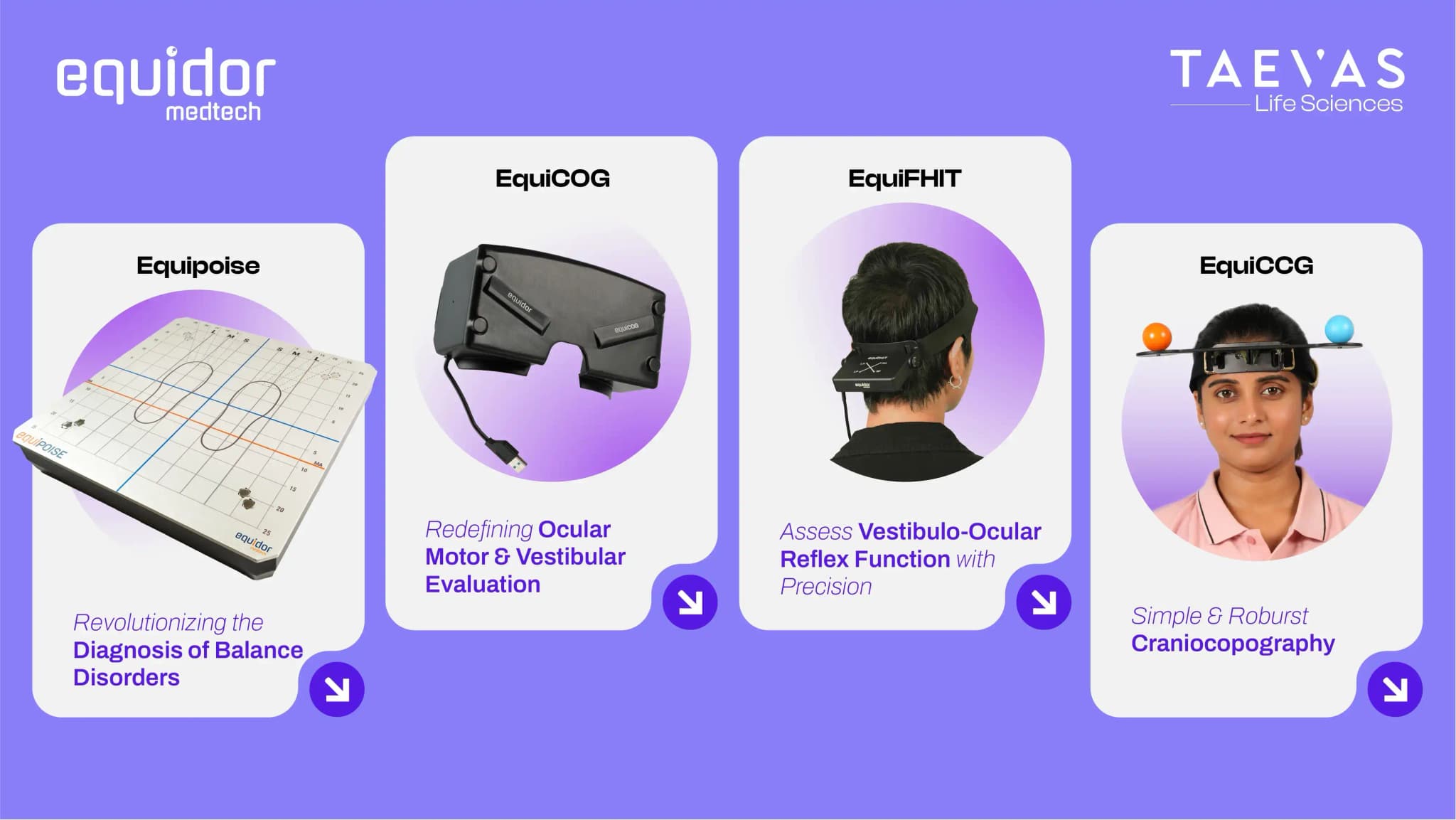
Taevas presents the Equidor suite, comprising EquiPoise, EquiCOG, EquiCCG, and EquiFHIT, to deliver end-to-end vestibular and balance testing specifically designed for vertigo diagnosis and management. Each device offers rapid, objective data that guides targeted treatment plans and speeds patient recovery.
Key Features
Comprehensive vestibular assessment in a single platform
High-precision eye-movement and nystagmus tracking
Data-driven insights to tailor rehabilitation protocols
Fast setup and intuitive integration into clinical workflows
Take Action
If you or your patients experience dizziness, imbalance, or recurrent vertigo, insist on a full vestibular workup. Visit Taevas Life Sciences to download the brochure, or call +91 87654 22222 to schedule a hands-on demonstration.
Accurate diagnosis leads to confident treatment and faster relief.
References
1. ET HealthWorld. “Vertigo affects 1 in 10 people worldwide… In India, prevalence is 0.71 % (>9 million).” 11 Nov 2022. Link:
2. Thirunavukkarasu, K., Padmanaban, J., & Ramsankar, S. A. (2022). Five-years prevalence of vestibular disorders, as seen in a tertiary care hospital. *EPRA International Journal of Multidisciplinary Research (IJMR), 8(10). https://doi.org/10.36713/epra11626
3. Shyam Sudhakar S. (2025). Etiological factors and management of vertigo - a retrospective study. The Medical journal of Malaysia, 80(Suppl 1), 59–64. https://www.e-mjm.org/2025/v80s1/vertigo-and-dizziness.pdf
4. Taevas Global. (n.d.). *Taevas Global*. Retrieved June 16, 2025, from https://www.taevasglobal.com/