

A sudden spin
Ravi, 42, felt the hallway tilt beneath him as he walked into a meeting. That dizzy moment was a symptom of a balance disorder, a condition affecting 180 million Indians.1 These disorders can turn everyday actions into a rollercoaster, making you feel like you're spinning, floating, or tipping over. Occasional dizziness is normal, but frequent imbalance could signal something more serious.2
Balance: A neural symphony
Maintaining balance is a team effort between your inner ear, eyes, muscles, and joints. The brain integrates vestibular, visual, and proprioceptive inputs to maintain balance. When these systems work together, you stay steady and oriented. But when they misfire, even simple movements can feel like a spin or a stumble.3,4
Why am I wobbling?
Age-related factors
- Inner ear hair cell deterioration
- Reduced muscle strength & flexibility
- Vision decline
- Slower reaction times
Medical conditions
- Ear infections
- Stroke
- Multiple sclerosis
- Parkinson’s disease
- Diabetes (neuropathy)
- Meniere’s disease
- Vitamin D deficiency [linked to Benign Paroxysmal Positional Vertigo (BPPV)]
Medications
- Antidepressants (dizziness)
- Blood pressure medicines (orthostatic hypotension)
- Sedatives/tranquilizers
- Ototoxic antibiotics
- Anti-seizure medicines
Lifestyle factors
- Sedentary lifestyle
- Poor diet (Vitamin D & B12 deficiency)
- Excessive alcohol
- Smoking
- Obesity

Neurogenic balance disorders
- Vestibular disorders (Peripheral conditions)
Benign paroxysmal positional vertigo (BPPV)
A sudden spinning sensation triggered by head movements, caused by loose crystals in the inner ear.
Labyrinthitis
Inner ear infection causes dizziness, vertigo, and sometimes hearing loss.
Ménière’s disease
Episodes of vertigo, hearing loss, ringing in the ears, and ear fullness are linked to fluid buildup.
Vestibular neuronitis
Inflammation of the vestibular nerve, often viral, can cause vertigo without hearing loss.
Perilymph fistula
Fluid leak from inner to middle ear; leads to dizziness, nausea, and worsens with activity.
Mal de débarquement syndrome (MdDS)
Feeling of rocking or swaying after travel or motion exposure; may last days to months.
Vestibular migraine
Imbalance due to specific altered visuo-vestibular cortical interactions.

- Neurodegenerative conditions (Central conditions)
Alzheimer's disease, Progressive supranuclear palsy, Frontotemporal dementia, Motor neurone disease, Multiple system atrophy, and Parkinson’s disease
In these neurogenerative diseases, a progressive impairment and destruction of parts of the nervous system, particularly the brain and neurons leading to difficulty in balance.
Balance testing? Still in the stone age
Clinicians still use traditional tests like positional maneuvers, otoscopy, MRI, and caloric testing, which only assess the horizontal canal and not central vestibular processing. No surprise: Many patients bounce without answers. Instead, the physicians could choose new age diagnostics.
The advancements in balance testing: smarter, faster tools
| System | Highlights | What’s new & how it works | What you’ll do | Worth using |
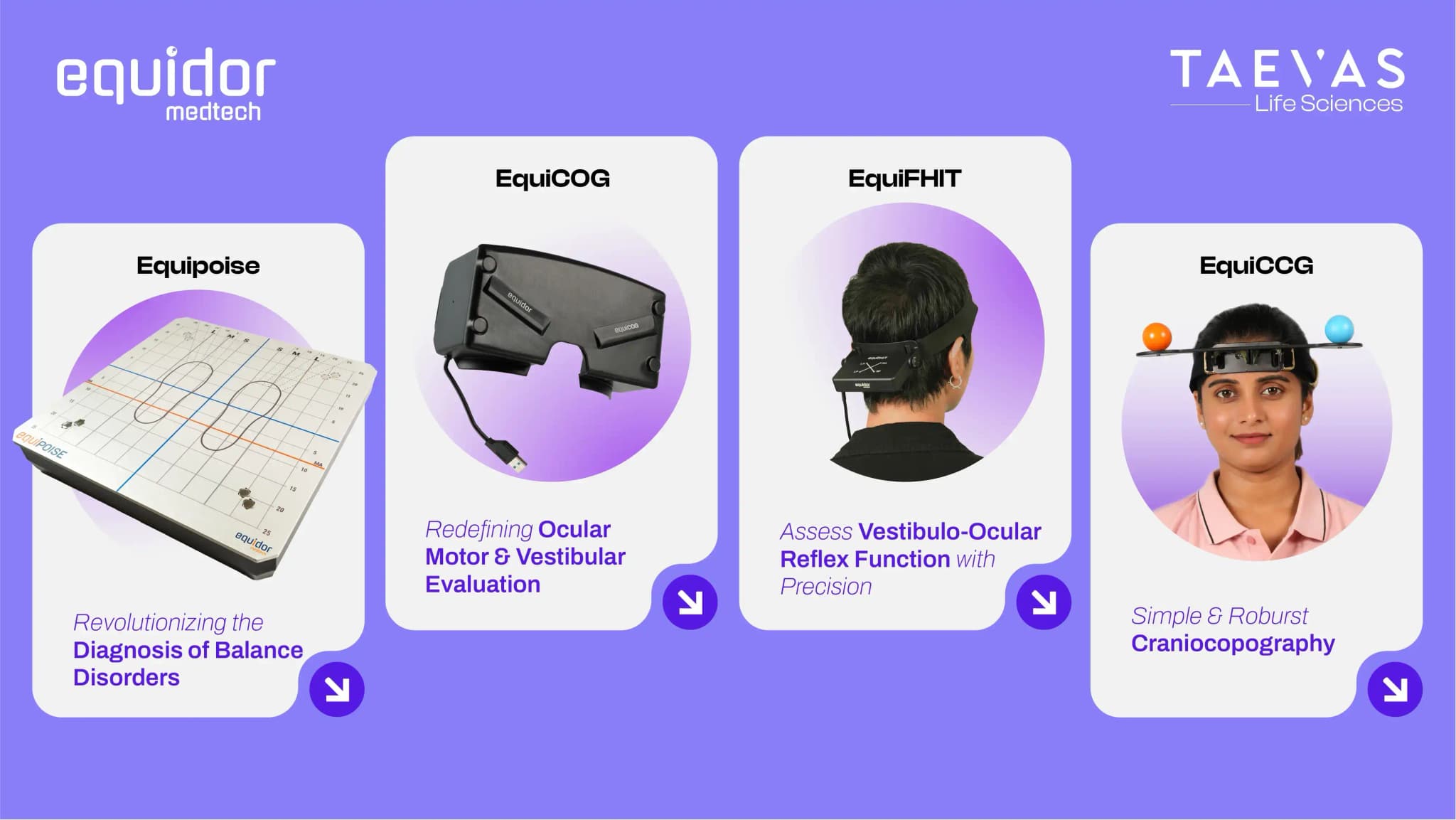
| EquiCOG | Real-time head & eye tracking, torsional plotting, pupillometry | Adds torsional tracking & pupillometry; tracks eye reactions to decode brain signals | Wear a headset, follow the dots, and relax for 30 minutes | Full map of inner ear balance system, |
| EquiCCG | Automated metrics, real-time feedback, no dark room | Replaces manual tracking with smart vision tech to monitor head/body sway | March or stand with a smart head tracker on the head | Shows brain-muscle-ear sync; great for rehab tracking |
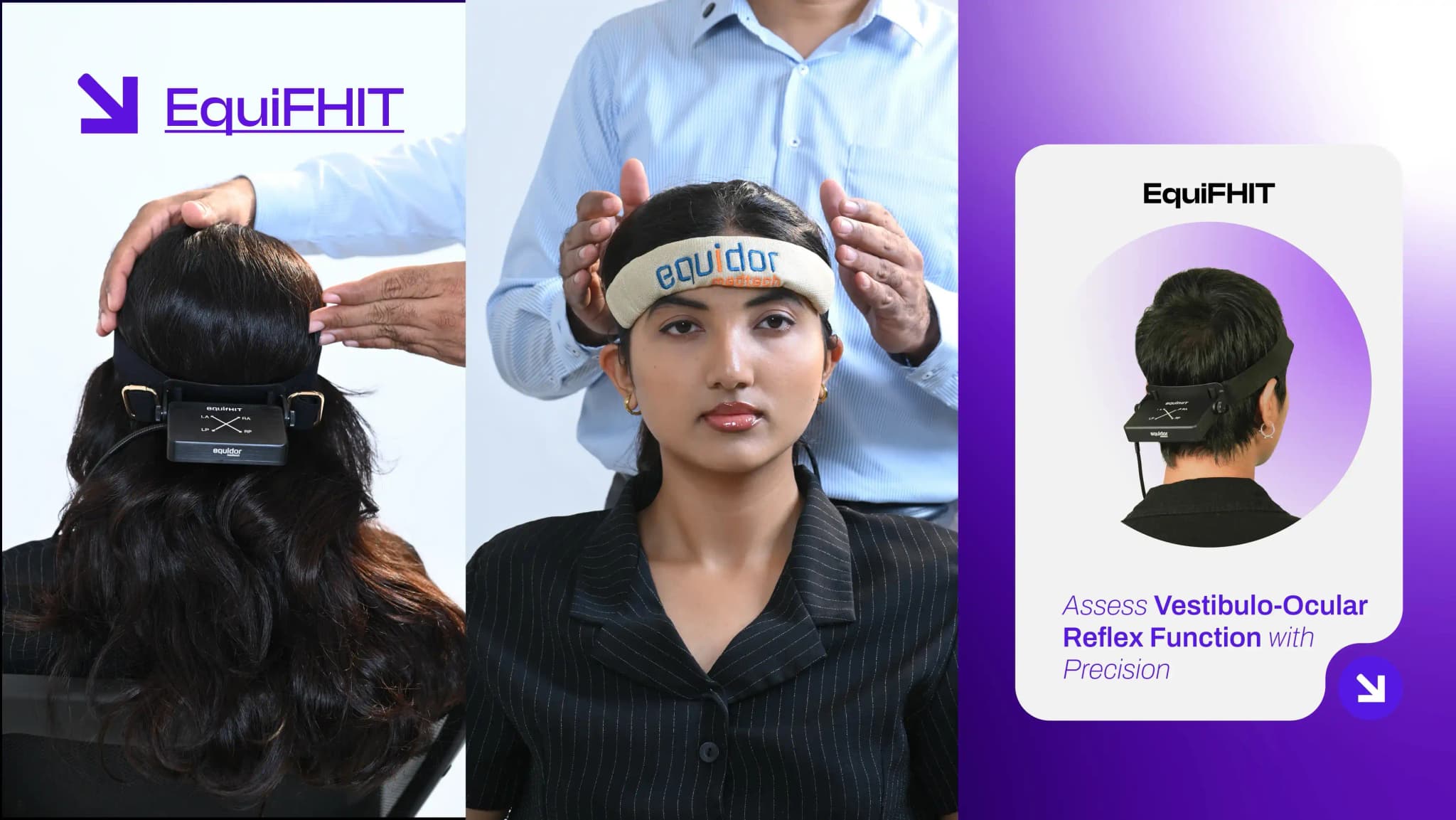
| EquifHIT | Canal-specific testing, optotype-based assessment, color-coded results | Enables individual canal testing; tests eye lock during fast head movement | Wear a headband, read quick letters, tap a button | Spot reflex issues missed by old tests; instant results, all 6 canals analyzed |
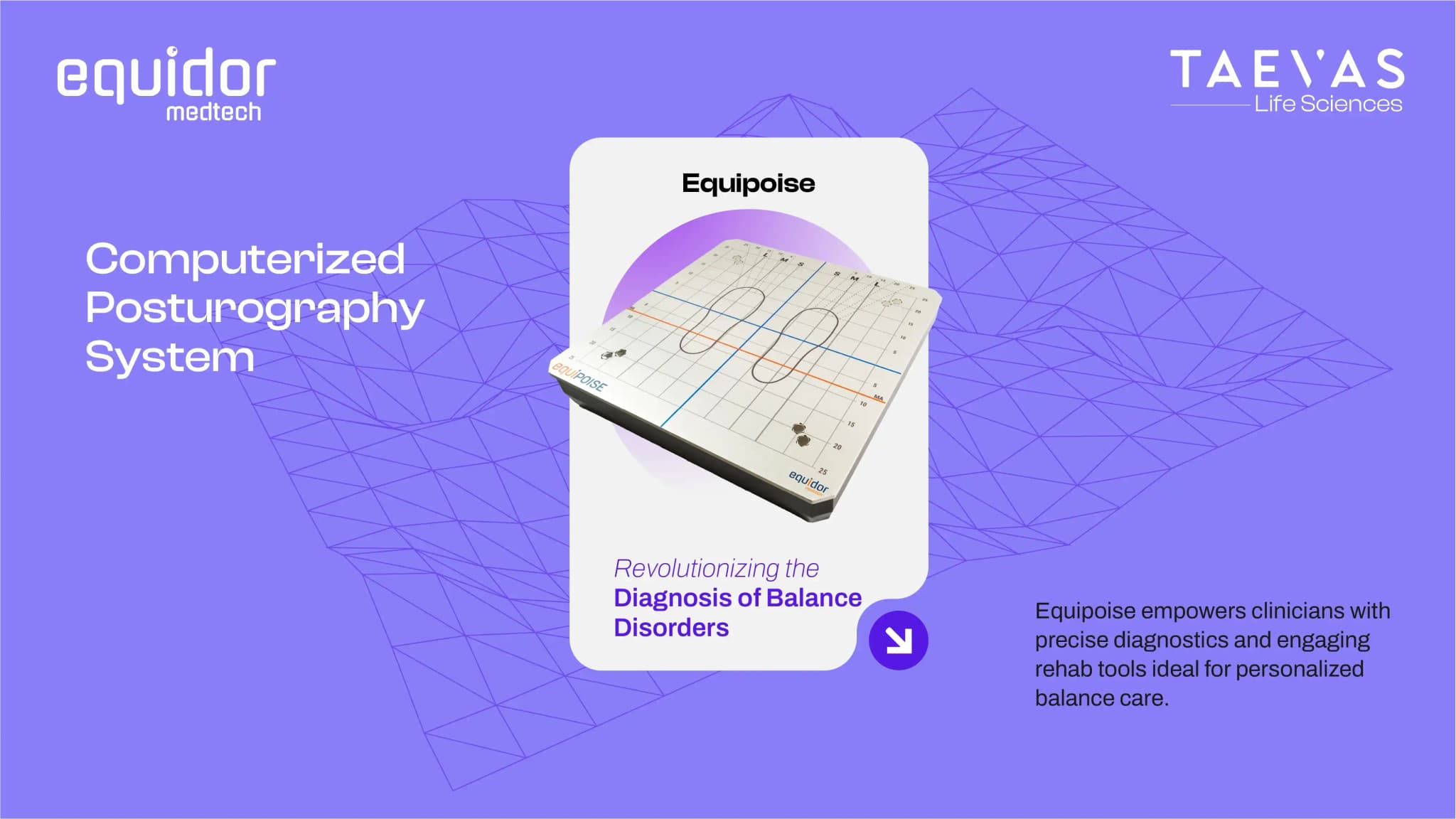
| Equipoise | High-res platform, real-time sway analysis, rehab games | Combines diagnostics with interactive rehab; measures weight shifts and steadiness | Stand on the pressure plate, view live balance stats | Pinpoints balance issues; built-in training games help fix them |

Balance check: 4 simple steps to steady yourself
- Log It
Note when dizziness happens, how long it lasts, and what triggers it. - See your doctor
Share your notes with a primary care physician or specialist. - Ask for smart tests
If symptoms persist. - Get specialized help
Consider a neurologist or vestibular therapist for deeper care.
Don’t wait till you wipe out
Feeling dizzy, off-balance, or tripping more than usual? That’s your body throwing warning signs. Catching these early with smart diagnostics like EquiCOG, EquifHIT, EquiCCG, and Equipoise isn’t just smart, it’s a total game-changer. Get checked, get clarity, and get ahead of the fall.
For more information, visit www.taevaslifesciences.com
Book your consultation today.
References
1. From our online archive. Don’t live with a dizzy head. The New Indian Express [Internet]. 2022 Feb 8 [cited 2025 Jul 10]; Available from: https://www.newindianexpress.com/cities/kochi/2022/Feb/08/dont-live-with-a-dizzy-head-2416575.html
2. Balance disorders [Internet]. NIDCD. [cited 2025 Jul 10]. Available from: https://www.nidcd.nih.gov/health/balance-disorders
3. Bhandari A. Balance Awareness Week 2024: Understanding and identifying balance disorders [Internet]. Neuroequilibrium. 2024 [cited 2025 Jul 10]. Available from: https://www.neuroequilibrium.in/balance-awareness-week-2024-understanding-and-identifying-balance-disorders/
4. Cronin T, Arshad Q, Seemungal BM. Vestibular deficits in neurodegenerative disorders: balance, dizziness, and spatial disorientation. Frontiers in neurology. 2017 Oct 26;8:538.
5. Kaski, D. Neurological update: dizziness. J Neurol 267, 1864–1869 (2020). https://doi.org/10.1007/s00415-020-09748-w
6. Taevas Global. (n.d.). *Taevas Global*. Retrieved June 16, 2025, from https://www.taevasglobal.com/