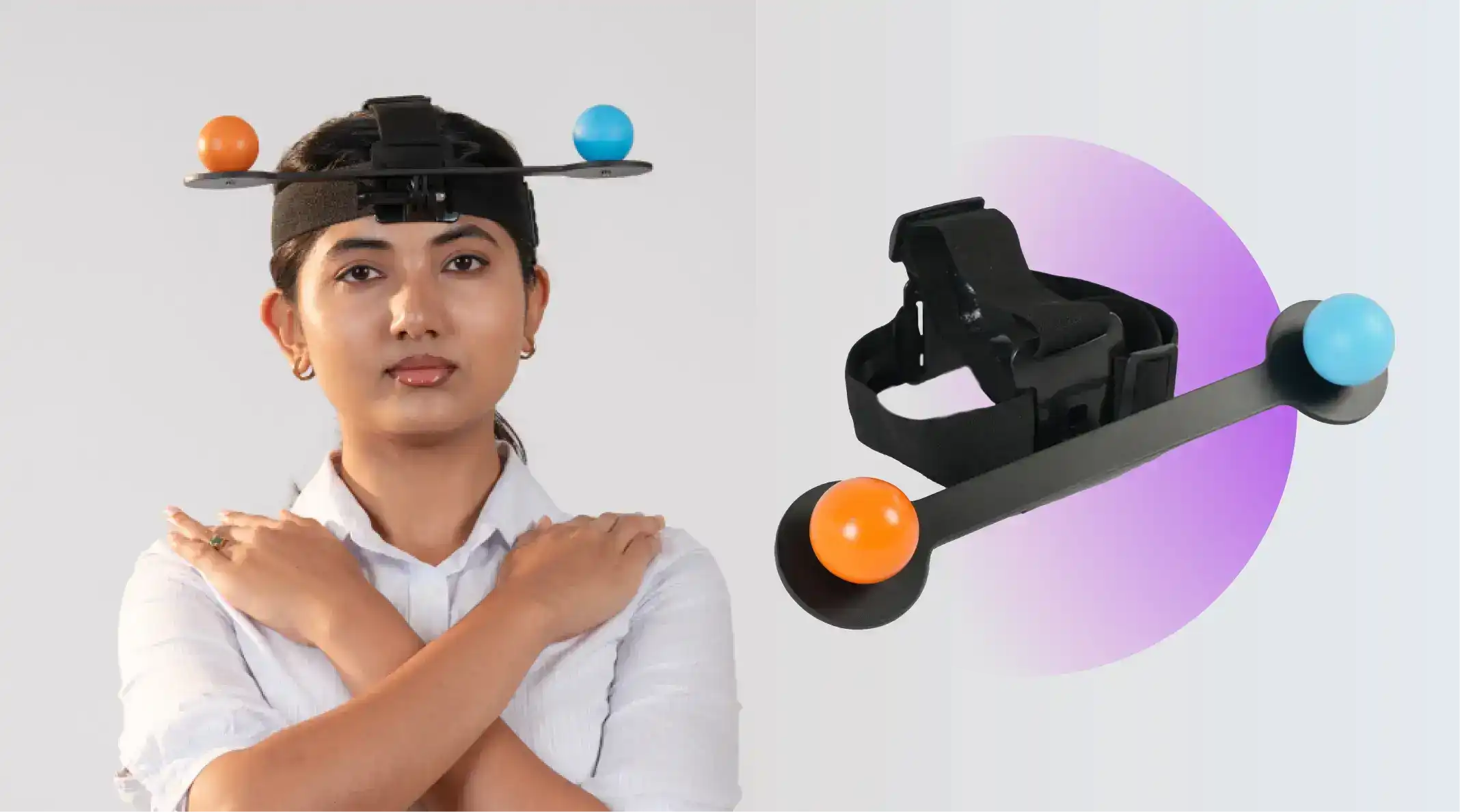
In the evolving field of neurology rehab, the demand for objective, quantifiable tools to assess balance and proprioception is skyrocketing. While functional, traditional assessments often lack the sensitivity to detect subtle deficits or track nuanced improvements over time. This is where computerized posturography tools step in, offering a data-driven approach to evaluating postural control.
Among these, the EQUIPOISE balance system stands out. Developed by Equidor MedTech and distributed by Taevas Life Sciences, EQUIPOISE empowers neurologists to assess, monitor, and treat balance impairments with real-time graphical reporting and scientifically validated metrics [1].
Why Posturography Matters in Neurology
Postural control is a multisensory process involving integrating visual, vestibular, and proprioceptive systems. Disruption in any of these: due to stroke, Parkinson’s disease, multiple sclerosis, or peripheral neuropathy, can lead to instability, falls, and reduced quality of life.
While tools like the Romberg test or the Berg Balance Scale provide a general overview, they are subjective and prone to inter-rater variability. In contrast, computerized posturography offers objective, reproducible data on sway velocity, center of pressure (CoP) displacement, and directional instability—metrics critical for diagnosis and rehabilitation planning [2].
EQUIPOISE: A New Standard in Balance Assessment
The EQUIPOISE system features a 60×60 cm forceplate platform with a 100 Hz sampling rate, capturing high-resolution data on balance, gait, and strength. Its intuitive software and customizable protocols make it ideal for clinical neurology settings.
Key Features:
- Real-time graphical feedback: Visualizes sway patterns and directional instability.
- Dynamic protocols: Includes escalating sensory denial, motor complexity, and cognitive load tasks.
- Rehabilitation modules: Interactive tasks like “Pop the Fruit” and “Tokyo Runner” support proprioceptive retraining.
- Data visualization: Generates 2D sway plots and time-series graphs for clinical interpretation.
- Custom protocols: Tailored assessments for diverse neurological profiles [1].
Clinical Applications for Neurologists
- 1. Proprioceptive Testing with Real-Time Feedback
Proprioception—the body’s sense of position and movement—is often impaired in patients with cerebellar ataxia, diabetic neuropathy, or post-stroke hemiparesis. EQUIPOISE enables proprioceptive testing by isolating somatosensory input (e.g., eyes closed, foam surface) and quantifying sway responses.
“Sway increases when proprioceptive input is removed, suggesting a deficit in joint position sense—an important predictor of falls” [3].
- Vestibular Assessment Beyond the Romberg Test
Vestibular dysfunction can be subtle and difficult to quantify. EQUIPOISE extends the Romberg test into a data-rich, objective assessment, capturing sway patterns that may indicate unilateral vestibular hypofunction or central integration deficits.
Its ability to measure directional instability—especially in the anteroposterior and mediolateral planes—helps differentiate between cerebellar and basal ganglia involvement [2].
- Fall Risk Stratification in Aging and Neurodegeneration
Falls are a leading cause of morbidity in older adults and patients with neurodegenerative diseases. EQUIPOISE supports fall risk assessment by evaluating stability limits, reaction time, and postural adaptation under dual-task conditions.
By integrating cognitive tasks into balance protocols, EQUIPOISE mirrors real-world challenges, offering neurologists a more ecologically valid assessment of fall risk [4].
From Assessment to Action: EQUIPOISE in Neurology Rehab
Assessment is only half the equation. EQUIPOISE supports neurology rehab through interactive, gamified modules promoting motor learning and sensory reintegration.
Examples:
- Dynamic weight shifts: Enhance lateral and anteroposterior control.
- Unipodal stability tasks: Targets lower limb proprioception and strength.
- Postural smooth pursuit: Trains visual-vestibular coordination1.
These modules are engaging for patients and provide quantifiable outcomes, allowing neurologists to track progress session by session.
Scientific Validation and Normative Data
A 2024 systematic review by Julienne et al. synthesized normative data from 44 studies and 17 meta-analyses, confirming the clinical utility of computerized posturography in identifying postural instability across age groups. The study emphasized the need for standardized, instrumented assessments, particularly in neurology, where subtle deficits can have significant functional consequences [2].
EQUIPOISE aligns with these findings by offering:
- Standardized test protocols
- Age- and condition-specific reference values
- Elimination of inter-observer variability
Case Snapshot: Post-Stroke Balance Rehabilitation with EQUIPOISE
A 67-year-old male with left-sided proprioceptive deficits and balance impairment following a right MCA infarct. Clinical evaluation revealed increased sway, reduced stability limits, and low ambulatory confidence.
An 8-week rehabilitation program was conducted using the EQUIPOISE computerized posturography system, incorporating:
- Escalating Sensory Denial (ESD) to evaluate somatosensory input,
- Rhythmic Weight Shifts (RWS) for dynamic postural control,
- Limits of Stability (LOS) to enhance weight-shifting strategies,
- Interactive proprioceptive training via the Tokyo Runner module.
The patient showed a 42% improvement in directional stability, with enhanced anterior-posterior and medial-lateral sway metrics. Subjective confidence during upright activities also improved.
These findings align with prior research by De Luca et al., who reported improved reactive balance and proprioceptive control in stroke patients undergoing computerized balance training [5] and Winter et al., who observed up to 45% gains in motor performance through proprioceptive interventions [6].
EQUIPOISE facilitated targeted proprioceptive retraining, enabling quantifiable balance gains aligned with best practices in post-stroke neurology rehab.
Why EQUIPOISE Outperforms Traditional Balance Tools
| Feature | Traditional Tools | EQUIPOISE Balance System |
| Objectivity | Subjective scoring | Real-time forceplate data |
| Reproducibility | Inter-rater variability | Standardized protocols |
| Proprioceptive Testing | Limited | Isolated sensory input tasks |
| Cognitive Load Integration | Rare | Dual-task balance protocols |
| Visual Feedback | Absent | Real-time 2D sway plots |
| Data Archiving | Manual | Digital records with tagging |
Final Thoughts
EQUIPOISE offers clarity in a field where subjective symptoms often cloud objective findings. For neurologists committed to elevating their rehab practice, this computerized posturography system delivers the precision, flexibility, and insight needed to transform balance assessment and therapy. Whether managing early Parkinson’s, post-stroke recovery, or age-related proprioceptive decline, EQUIPOISE helps you see what the eyes can’t and act confidently.
Call to Action
Visit Taevas Life Sciences for more details on EQUIPOISE or call +91 87654 22222 to schedule a hands-on demonstration.
References
- Taevas Life Sciences. EQUIPOISE Product Overview. 2025. https://www.taevasglobal.com/product-equipoise/
- Julienne A, Verbecque E, Besnard S. Normative data for instrumented posturography: a systematic review and meta-analysis. Front Hum Neurosci. 2024;18:1498107.
- Black FO. What can posturography tell us about vestibular function? Ann N Y Acad Sci. 2001;942(1):446-464.
- Shah S, Nanavati N. Impact of cognitive tasks on postural stability in young and older adults. Egypt J Otolaryngol. 2024;40:182.
- De Luca A, Giacino L, Rinaldi M, et al. Proprioceptive and core stability training to reduce postural instability in patients with chronic stroke: a pilot randomized controlled trial. Front Neurol. 2020;11:494.
- Winter D, Wang W, Dekker R. Proprioceptive training in clinical populations: a systematic review of outcomes and mechanisms. Front Rehabil Sci. 2022;3:830166.