

Overnight, obstructive sleep apnea (OSA) afflicts almost one billion grown-up men and women all over the planet, many of whom do not find lasting help with the gold-standard CPAP machine. Large masks, mandatory breathing, and the unpleasant noise of noisy compressors make non-adherence levels as high as 86% [1]. The iNAP Device presents an entirely new method: mask-free, intraoral negative-pressure treatment, approved by the FDA, and clinical studies done with respectable samples. This in-depth excursion unwinds the science, the evidence, the regulatory milestones, and why iNAP is becoming an attractive alternative to CPAP devices.
Introduction: A Paradigm Shift in Sleep Apnea Care
Conventional sleep apnea treatment has revolved around continuous positive airway pressure, which involves blowing air into the airway to keep it open. However, tightening the mask every night can be a burden most patients, especially for teachers who fall asleep behind the podium or truck drivers who have difficulty remaining awake. Most individuals do not use CPAP daily for more than four hours compared to the six-to-eight-hour window duration required for a full dose of efficacy.
Recently, scholars and engineers have attempted to find alternatives to CPAP devices that would maintain the effectiveness but improve comfort. Among these innovations is the iNAP device for sleep apnea, which applies negative pressure in the mouth to draw soft tissues forward and keep the airway open, without a mask or forced air. This blog discusses the type of innovative mechanism in iNAP, oral pressure therapy, its use in conjunction with the clinical study data of their iNAP device, and FDA 510(k)- Cleared status that offers it the potential to be a revolutionary device for patients globally.
Mechanism of Action: A New Pathway to Patency
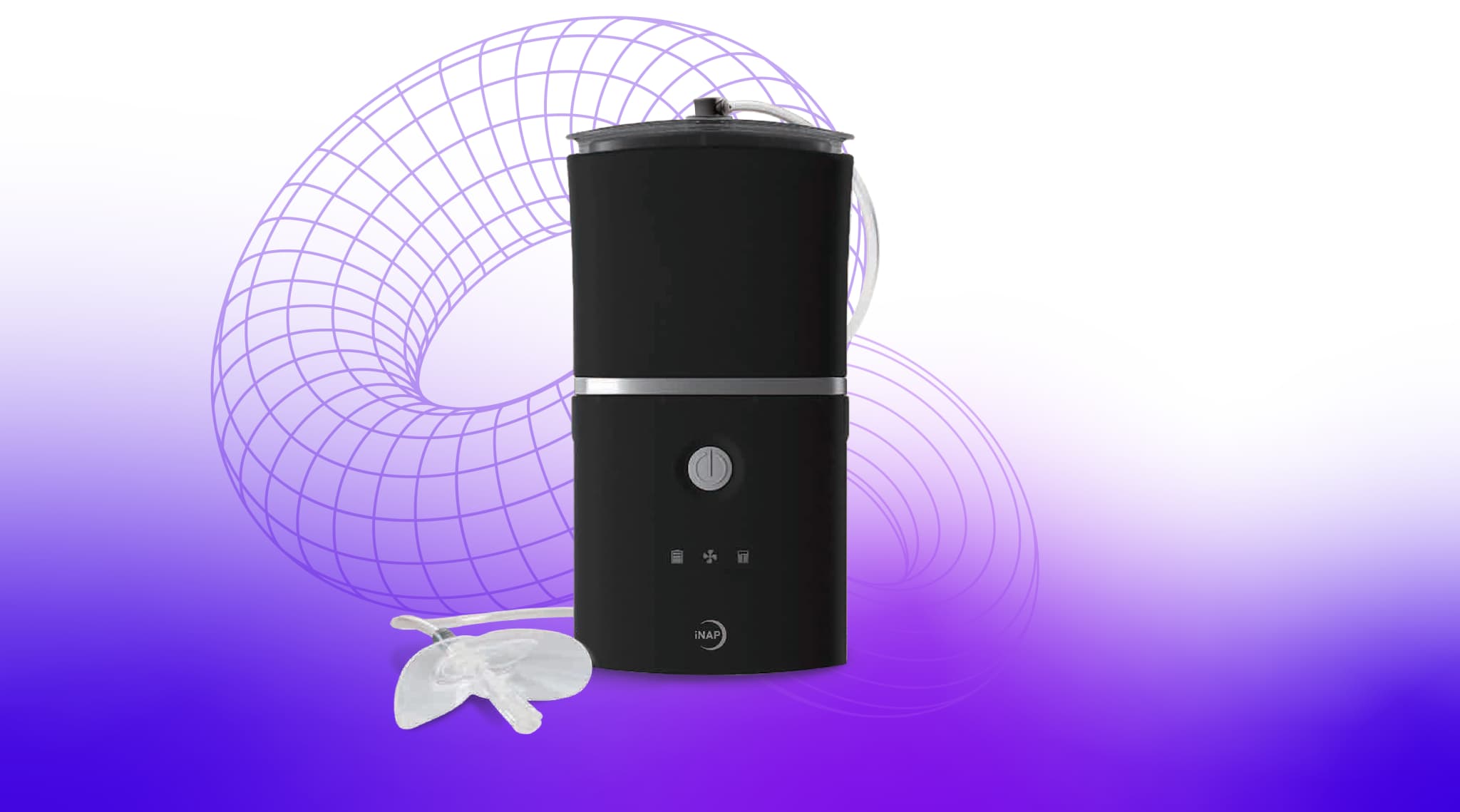
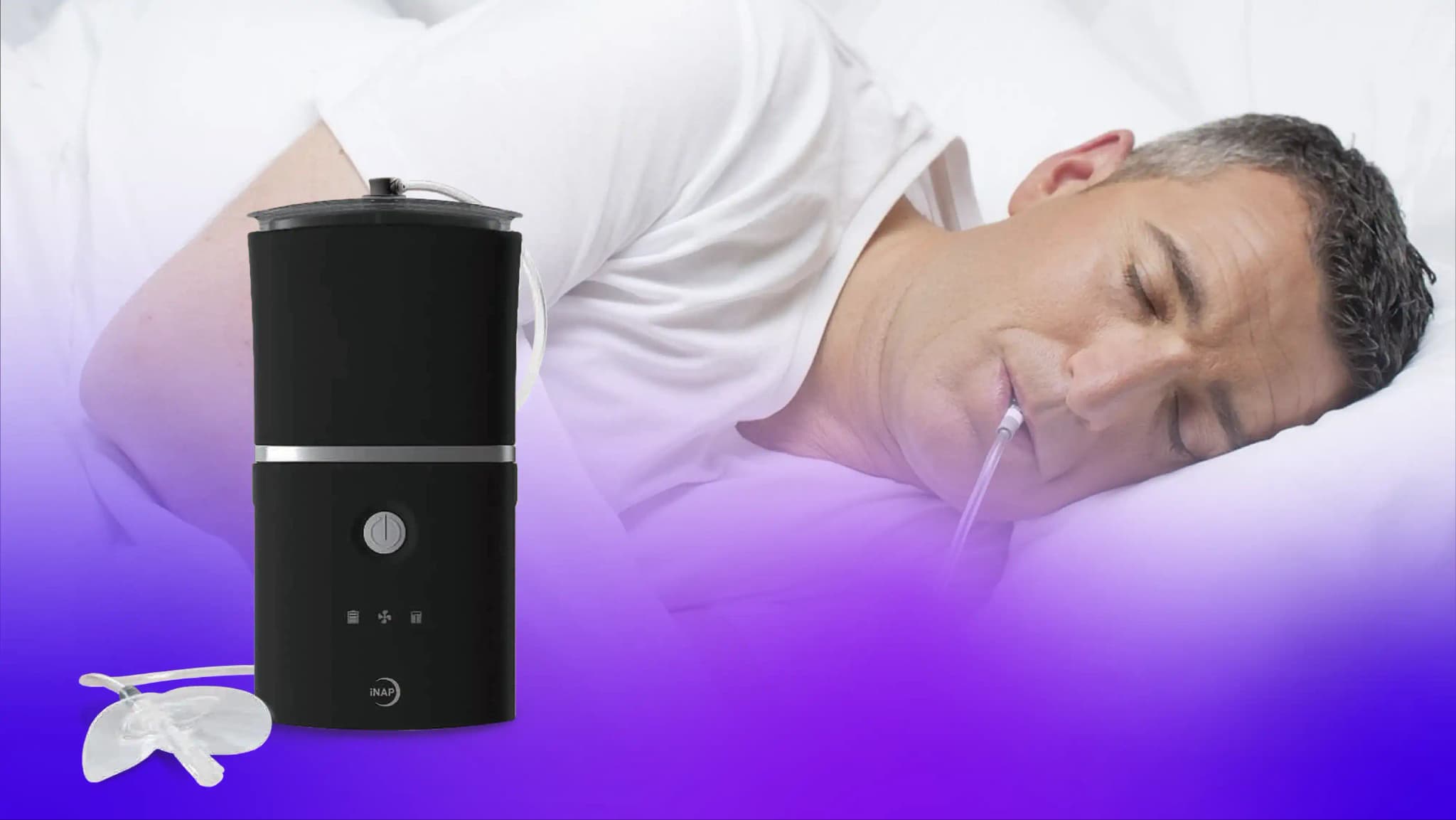
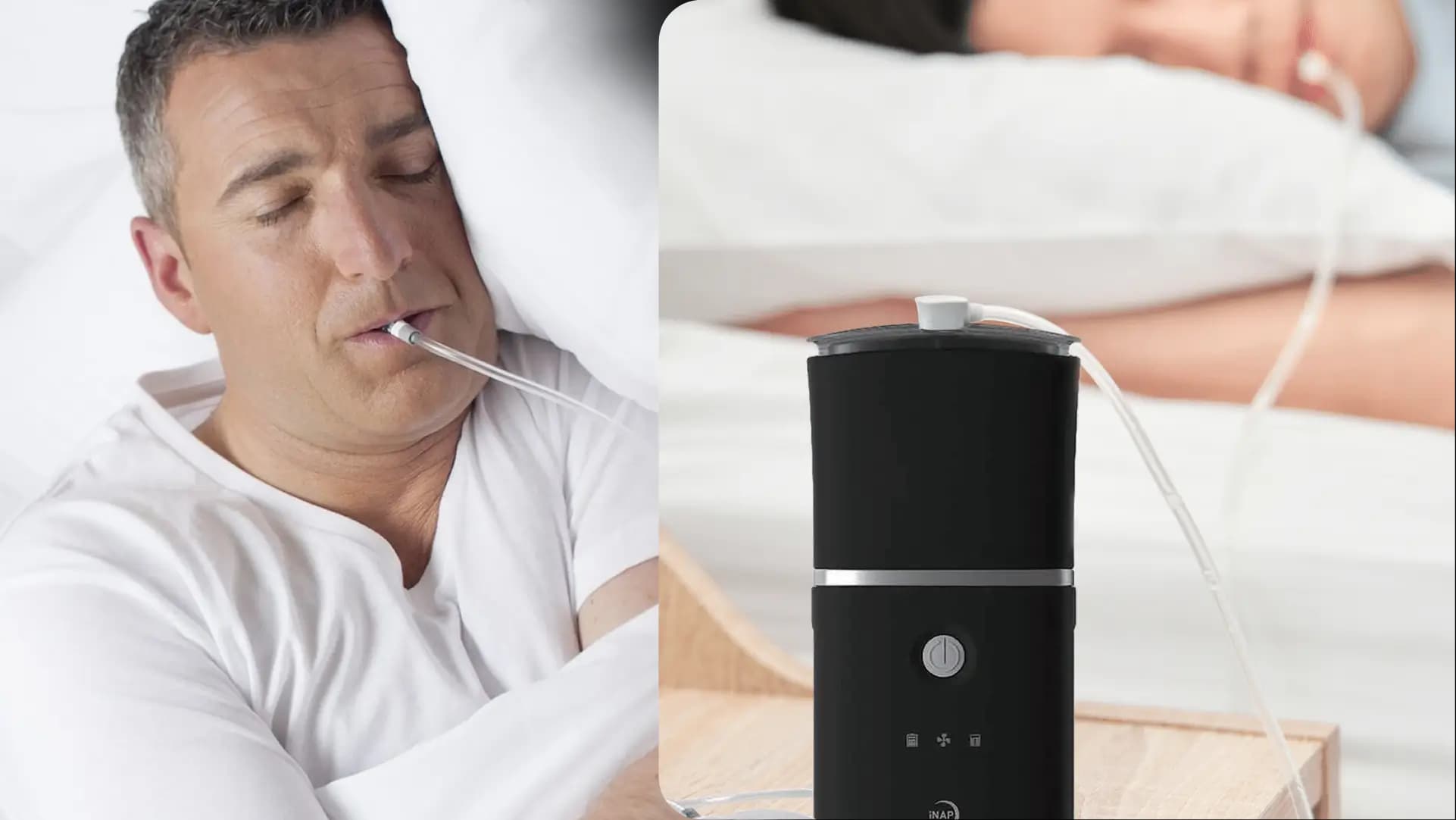
In contrast to the positive pressure of the CPAP device, which is called push-open, iNAP is based on oral pressure therapy. It is fitted with a soft, polymer mouthpiece that joins a thin tube to a smartphone-sized console. In sleep, the console produces a regulated vacuum (normally -40 mmHg) which pulls the tongue and soft palate forward and expands the retroglossal airway..
- Negative-Pressure Gradient:iNAPuses a vacuum that simulates the natural suction of the body and prevents a forced airflow and humidification.
- Intermittent Activation:The pump can automatically turn off when a desired amount of seal isestablished, which saves battery power (< 8 hours per charge) and noise (< 30 dBA).
- Automatic Titration:Pressure sensors are available as part of the unit, constantly ensuring theappropriate intraoral vacuum level and automatically adjusting if the seal integrity begins to drop.
By maintaining passive nasal breathing and patient comfort, this so-called pull-forward strategy is essential to achieve compliance.
FDA Clearance: A Regulatory Milestone
May 26, 2020, was the day when the iNAP One Sleep Therapy System (Somnics Health) achieved FDA 510(k) clearance (K193460) under 21 CFR 872.5570 as an Intraoral Pressure Gradient Device. This milestone was after a scrutinized evaluation compared to iNAP and its predicate device, Winx Sleep Therapy System, or K130538 [2,3].
- Classification: Class II medical device
- Indication: Home use in OSA patients who are adults and who do not like positive airway pressure
- Bench Testing: Proven to provide harmonized pressure delivery, regardless of temperature conditions and humidity
- Biocompatibility: oral interface material, ISO 10993 cytotoxicity, sensitisation, and irritation reported as negative.
- Clinical Evidence: Safety data as well as performance measures in line with the FDA requirements on substantial equivalence
Such regulatory endorsement not only confirms the safety of the iNAP but also approves its innovative mechanism of action, allowing clinicians to prescribe a mask-free, scientifically proven solution.
Clinical Validation: Cornerstone Studies
A portfolio of clinical studies exploring the iNAP device includes a wide range of pivotal studies, multicenter, and meta-analyses.
Hung et al. (2019)
Design: Single-night, self-controlled crossover in 15 adults (AHI 15–50 events/h).
Primary Outcome: AHI reduction of 55.7% (23.1 → 9.7 events/h).
Secondary Outcomes: reduction of ODI by 56.7%; 73% higher responder rate, no serious adverse events.
Adherence Metric: seal had an adherence of 86.6% of the night [4].
Cheng et al. (2021)
Design: Multicentre study, N = 32 (BMI about 29 kg/m 2, AHI + 50).
Efficacy: 75% of patients encountered a 50% improvement of AHI and home-treated AHI of <20.
Adherence: > 6 hours/night utilization in 80% of the subjects.
Patient Satisfaction: Great comfort and readiness to continue treatment [5].
Nilius et al. (2024)
Design: Long-term safety-efficacy cohort.
Results: 80% AHI < 10 at one month; average nightly treatment > 6 hours; low rates of oral dryness (< 5%), which improve easily with hydration [6].
Camacho et al. (2016)
Scope: Meta-analysis details on the oral pressure treatments, such as iNAP.
Findings: 30-50% reduction in AHI similar to low-pressure CPAP with far fewer interface complaints and better patient preference [7].
Combining these iNAP device clinical study outcomes makes these devices comparable to CPAP in efficacy, but even more comfortable and adherent in the real world.
Patient-Centered Outcomes: Beyond AHI
The actual measures of clinical outcomes are necessary, but so is what they allow people to accomplish in their lives. In post-marketing studies:
- 88% of users felt significant improvements in daytime alertness.
- 90% had the consistency of use at night (> 6 h /night).
- 73% average decrease in sleep-disordered breathing events.
This results in safer journeys, more concentration at the office, more vigorous mornings, and an emotional and physiological change.
iNAP vs. Alternatives to CPAP Devices
A landscape of CPAP alternatives to CPAP devices has emerged [8], yet iNAP stands out:
| Therapy Type | Mechanism | Invasiveness | Comfort | Portability |
| CPAP | Positive airflow | Non-invasive | Low (mask) | Moderate |
| MADs | Jaw advancement | Non-invasive | Moderate (TMJ risk) | High |
| EPAP | Exhalation valve | Non-invasive | Low (partial relief) | High |
| Inspire | Nerve stimulation | Surgical | High (no mask) | Low |
| iNAP | Negative oral pressure | Non-invasive | High | High |
The iNAP sleep apnea device balances efficacy, comfort, and easy-to-use features with its mask-free interface, smart titration, and whisper bliss qualities.
Future Directions: Expanding the Clinical Horizon
In addition to the current signs, e.g., among the innovations of the next generation:
- AI-Driven Titration: The iNAP Lab+ app pairs machine learning with negative-pressure titration to help individualize settings.
- Interface Customization: Pediatric and adolescent mouthpiece interfaces.
- Expanded Indications: Central sleep apnea and Cheyne-Stokes respiration: New indications in progress.
- Insurance Integration: Initiatives to gain HSA/FSA eligibility and coverage reimbursement through private payers.
These initiatives underscore a commitment to data-driven personalization and broadening the INAP Device’s clinical utility.
Conclusion: Merging Science with Human Impact
iNAP device is a product that personifies a human-centered approach to OSA treatment, combining groundbreaking negative-pressure physics and a patient-first design. FDA clearance (K193460) and a set of iNAP device clinical study materials have verified its safety, efficacy, and real-world effect. Flexible pricing destroys economic obstacles, and comparative analyses depict iNAP as the most affordable alternative to CPAP devices.
To patients who stopped using CPAP due to its inefficiency in seeking relief, iNAP is a breath of fresh air backed by science and powered by regulatory security. In the continuous development of sleep medicine into a personalized and non-invasive treatment sector, the iNAP device is set to change night and day in different geographies.
Call to Action
If you or a patient struggles with sleep apnea, consider the iNAP device, a mask-free alternative to CPAP. Visit Taevas Life Sciences to learn more or call +91 87654 22222 to request a hands-on demonstration. Experience the comfort and effectiveness of iNAP—an FDA-cleared, clinically validated solution that could change your nights for the better.
References
- Lorenzi-Filho G, Almeida FR, Strollo PJ. Treating OSA: Current and emerging therapies beyond CPAP. Respirology. 2017;22(8):1500-1507.
- Somnics Inc. FDA Approves Somnics iNAP Sleep Therapy Pressure Titration Capability. Sleep World Magazine. Published June 23, 2023. https://sleepworldmagazine.com/2023/06/23/fda-approves-somnics-inap-sleep-therapy-pressure-titration-capability/. Accessed July 17, 2025.
- FDA. 510(k) Premarket Notification: K193460. Accessed July 17, 2025. https://www.accessdata.fda.gov/scripts/cdrh/cfdocs/cfPMN/pmn.cfm?ID=K193460.
- Hung TC et al. A novel intermittent negative air pressure device ameliorates obstructive sleep apnea syndrome in adults. Sleep Breath. 2019;23(3):849–856.
- Cheng CY et al. Evaluation of efficacy and safety of intraoral negative air pressure device in adults with obstructive sleep apnea in Taiwan. Sleep Med. 2021;81:163–168.
- Nilius G et al. Multicenter safety and efficacy study of a negative-pressure intraoral device in obstructive sleep apnea. Sleep Med. 2024;119:139–146.
- Camacho M et al. Oral pressure therapy (Winx) for obstructive sleep apnea: a meta-analysis. Sleep Breath. 2016;20(3):1011–1012.
- Harvard Health Publishing. Beyond CPAP: Other options for sleep apnea. Updated 2023. https://www.health.harvard.edu/staying-healthy/beyond-cpap-other-options-for-sleep-apnea. Accessed July 17, 2025.