Severe vertigo can impair patients' activities, and they can find themselves taking support from their surroundings as they spin uncontrollably, disrupting everyday activities like walking across a room or focusing on conversation. Even after consulting several physicians and undergoing routine diagnostics, such as otoscopy, hearing tests, and standard balance exams, the persistent spinning sensation often lingers, leaving individuals frustrated, anxious, and uncertain about the next steps in their care. Nearly one in five adults experiences dizziness at some point in their lives, yet many walk away without a clear diagnosis.1
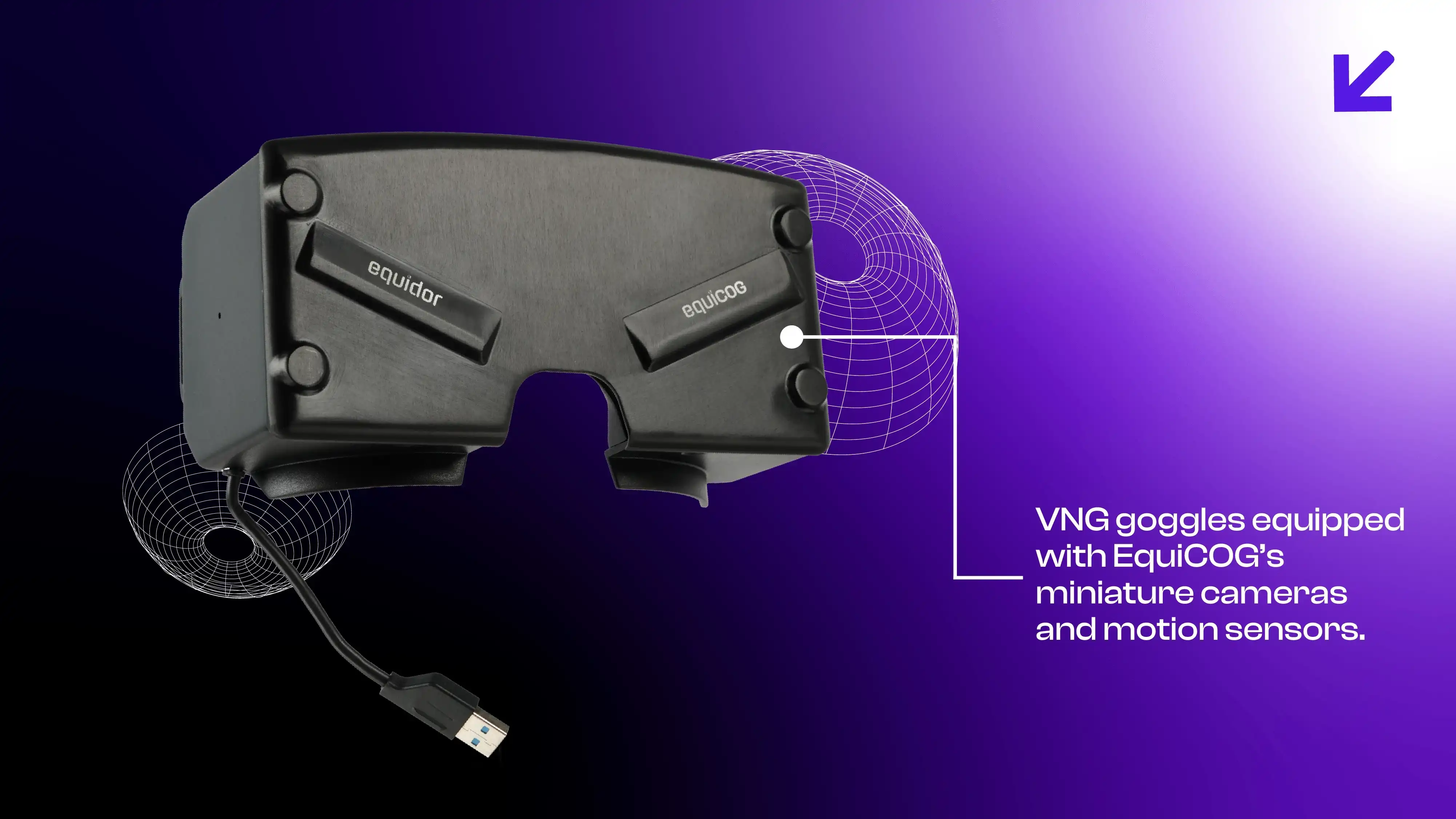
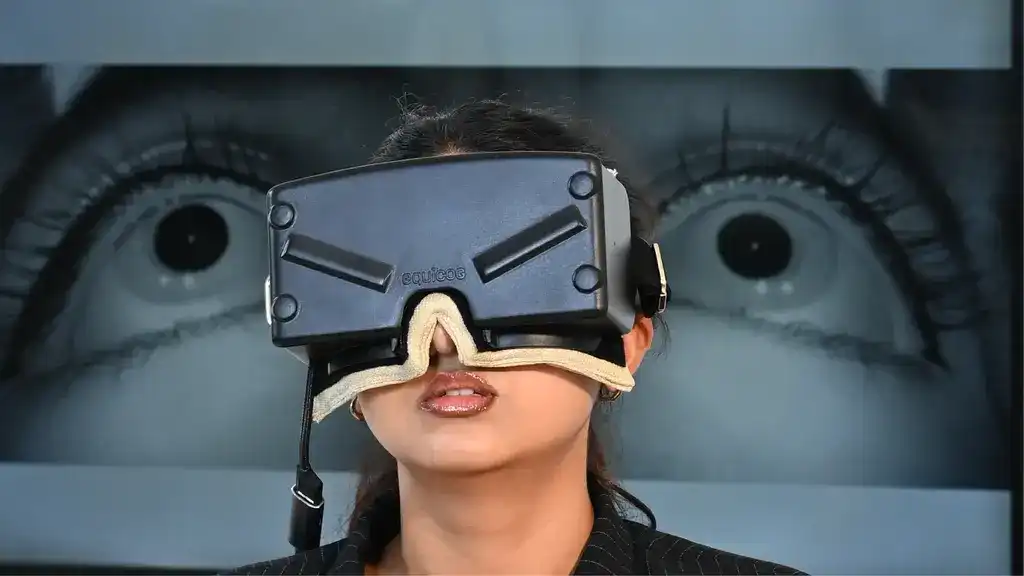
EquiCOG transforms that story by elevating videonystagmography (VNG) beyond horizontal and vertical tracking, delivering the clarity that both patients and clinicians need.
What is vestibular dysfunction?
The vestibular system is located in the inner ear. It controls balance and spatial orientation. When it malfunctions, patients feel:
- Spinning or whirling sensations (vertigo)
- Unsteadiness or imbalance
- Nystagmus (involuntary eye jerks)
- Nausea or motion intolerance
Think of it as your body’s internal GPS. If its sensors misfire, your sense of “up” and “down” can skew dramatically.
Signs & Symptoms
- True spinning sensation (rotational vertigo)
- Oscillopsia (objects appear to bounce or sway)
- Imbalance during walking or standing
- Sudden onset falls or near-falls
- Visible nystagmus on gaze fixation
- Accompanying nausea/vomiting
Early recognition speeds up treatment and improves outcomes.
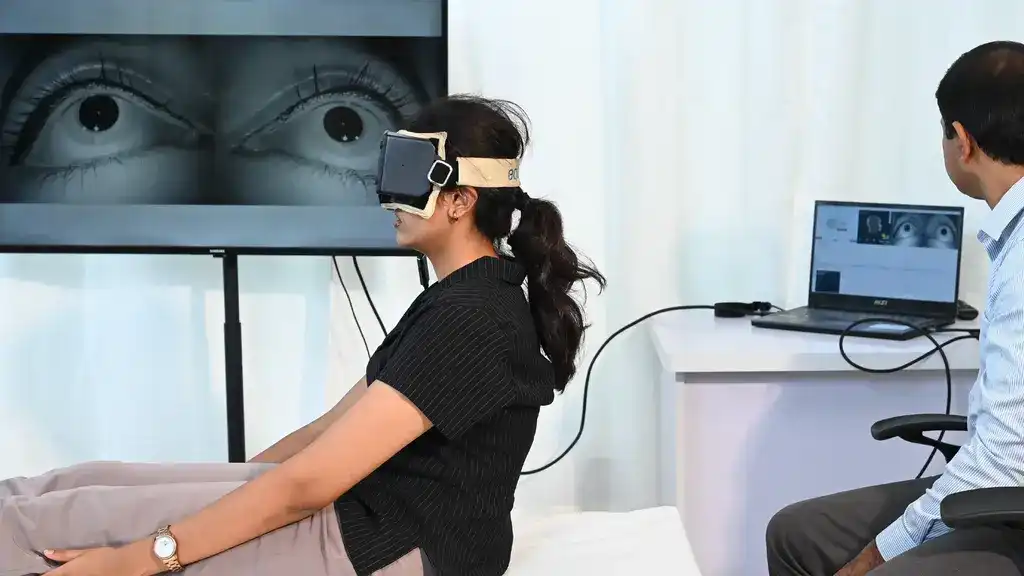
Risks of not detecting and treating
- Recurrent falls leading to fractures or head injury
- Chronic dizziness and avoidance behaviour, fueling anxiety and depression
- Progression of untreated vestibular pathology (e.g., vestibular neuritis, Meniere’s disease)
- Reduced quality of life, social isolation
Timely, accurate vestibular diagnosis is not only useful but also lifesaving.
Current diagnostic landscape
Videonystagmography (VNG) remains a cornerstone in vestibular testing. Standard VNG:
- Uses infrared cameras to record horizontal and vertical eye movements
- Includes caloric testing, positional tests, and optokinetic stimulation
- Helps localize peripheral versus central causes of vertigo
Conventional systems lack simultaneous head-movement analysis and detailed torsional tracking, often leaving clinicians with incomplete data.
The EquiCOG Innovation
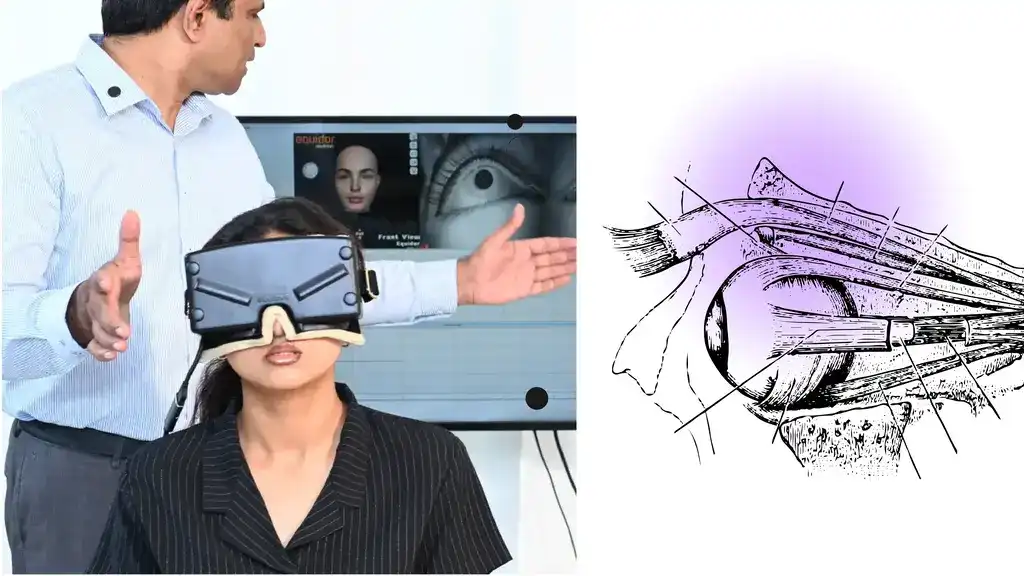
EquiCOG redefines VNG by integrating:
- High-frequency eye recording at 120 frames per second for slow-motion analysis
- Real-time head-orientation tracking to distinguish head tilt from true ocular torsion
- Torsional nystagmus tracing alongside horizontal and vertical data
- Configurable positional protocols with step prompts to guide testing
This holistic approach ensures that no subtle sign slips through the cracks.
How EquiCOG enhances vestibular diagnosis 4
- Precise Torsion Capture
EquiCOG’s infrared cameras and advanced iris-landmark algorithms detect rotations as small as 0.1°. - Synchronized Head Tracking
Real-time head-movement data filters out artifact, giving pure ocular readings. - Comprehensive Protocol Suite
From saccades and pursuit to caloric and chair-rotation tests, clinicians tailor exams to each patient’s needs. - Intuitive Reporting
Interactive dashboards present velocity traces, angular amplitude, and cumulative slow-phase velocity in clear grids and graphs.
Clinicians gain actionable insights in minutes, not days.
Call to action
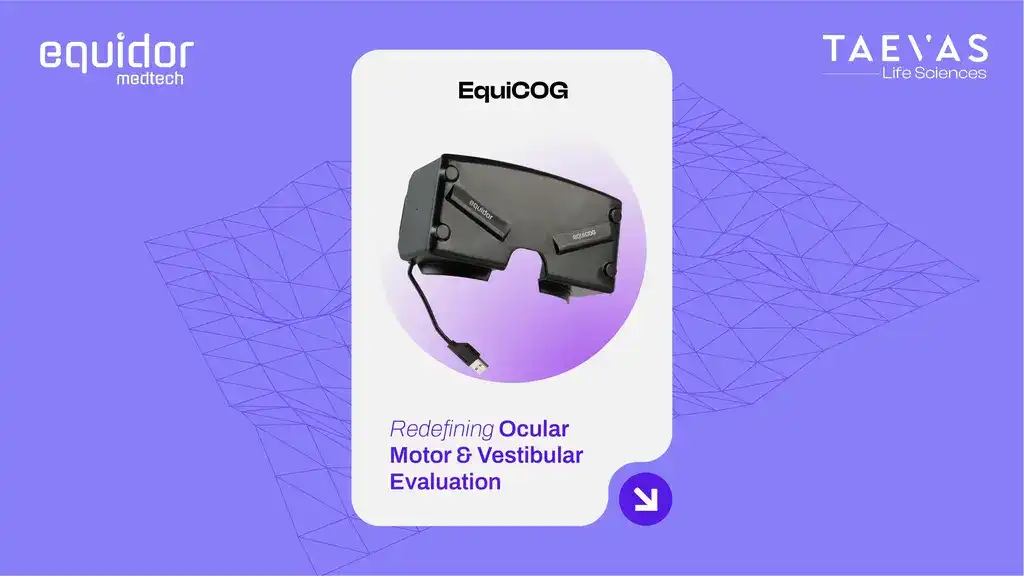
If you or a loved one experiences unexplained dizziness or imbalance:
- Self-screen with this checklist: spinning sensations, unsteadiness, nystagmus, and nausea and note down your observations.
- Consult your general practitioner or ENT specialist about advanced VNG.
- Ask if EquiCOG is available at your clinic or hospital.
- Visit Taevas Life Sciences to download the brochure, or call +91 87654 22222 to schedule a hands-on demonstration.
Empower your care with precision diagnostics.
References
- Neuhauser HK. The epidemiology of dizziness and vertigo. Handb Clin Neurol. 2016;137:67-82. doi: 10.1016/B978-0-444-63437-5.00005-4. PMID: 27638063.
- Donovan J, De Silva L, Cox H, Palmer G, Semciw AI. Vestibular dysfunction in people who fall: A systematic review and meta-analysis of prevalence and associated factors. Clin Rehabil. 2023 Sep;37(9):1229-1247. doi: 10.1177/02692155231162423. Epub 2023 Apr 10. PMID: 37036433.
- Blakley BW, Chan L. Methods considerations for nystagmography. J Otolaryngol Head Neck Surg. 2015 Jun 24;44(1):25. doi: 10.1186/s40463-015-0078-2. PMID: 26104786; PMCID: PMC4501377.
- Taevas Global. EquiCOG. Taevas Global website. Available from: https://www.taevasglobal.com/product-equicog/ Accessed 2025 Jul 28